All posts by Shannon

Free Technical Insights on Lowe’s and Three Other Home Improvement Stores Stocks

Stock Research Monitor: FND, LL, and HD

LONDON, UK / ACCESSWIRE / July 12, 2018 / If you want a free Stock Review on LL sign up now at www.wallstequities.com/registration. WallStEquities.com revisits the Home Improvement Stores space, whichsells a range of home repair and maintenance goods, such as hardware, tools, electrical goods, lumber, and structural material for construction and renovations. Home improvement companies purchase goods from manufacturers and wholesalers, and sell them to end users, such as do-it-yourself consumers and professional contractors. Under observation this morning are the following stocks: Floor & Decor Holdings Inc. (NYSE: FND), Lowe’s Cos. Inc. (NYSE: LOW), Lumber Liquidators Holdings Inc. (NYSE: LL), and The Home Depot Inc. (NYSE: HD). All you have to do is sign up today for this free limited time offer by clicking the link below.

Floor & Decor Holdings

Smyrna, Georgia headquartered Floor & Decor Holdings Inc.’s stock finished Wednesday’s session 6.31% lower at $48.52. A total volume of 2.07 million shares was traded, which was above their three months average volume of 892,030 shares. The Company’s shares have advanced 27.28% over the past year. The stock is trading above its 200-day moving average by 4.88%. Furthermore, shares of the Company, which operates as a multi-channel specialty retailer of hard surface flooring and related accessories, have a Relative Strength Index (RSI) of 40.96. Get the full research report on FND for free by clicking below at:

Lowe’s

Shares in Mooresville, North Carolina-based Lowe’s Cos. Inc. ended at $98.61, down slightly by 0.40% from the last trading session. The stock recorded a trading volume of 3.80 million shares. The Company’s shares have gained 13.80% in the previous three months and 29.32% over the past year. The stock is trading 5.81% above its 50-day moving average and 10.63% above its 200-day moving average. Moreover, shares of Lowe’s, which together with its subsidiaries, operates as a home improvement retailer in the US, Canada, and Mexico, have an RSI of 61.98.

On June 18th, 2018, Lowe’sCanada, a subsidiary of Lowe’s, announced a $593,631 donation to the Children’s Miracle Network and Opération Enfant Soleil organizations, following a successful initial fundraising campaign across the U.S. Part of the donated amount also came from a corporate donation made by the RONA banner, which was the official building materials provider for Maison Enfant Soleil signee Bonneville (in Quebec only), and from the sale of tickets for Maison Enfant Soleil signee Bonneville in RONA and Réno-Dépôt stores in Quebec. LOW’s complimentary research coverage is a few simple steps away at:

Lumber Liquidators Holdings

Toano, Virginia headquartered Lumber Liquidators Holdings Inc.’s stock ended yesterday’s session 4.77% lower at $25.14. A total volume of 1.09 million shares was traded, which was above their three months average volume of 968,440 shares. The Company’s shares have advanced 1.53% in the past month, 10.17% over the previous three months, and 2.49% over the past year. The stock is trading 9.12% above its 50-day moving average. Additionally, shares of the Company, which together with its subsidiaries, operates as a multi-channel specialty retailer of hardwood flooring, and hardwood flooring enhancements and accessories, have an RSI of 53.25.

On June 28th, 2018, Lumber Liquidators announced its recent donations of new flooring to two organizations that provide services to children. The Company donated 1,200 square feet of Tranquility Malted Oak luxury vinyl plank (LVP) to Explorations V Children’s Museum to update its lobby. The Company also donated 1,500 square feet of LVP to help complete the basement of Project: VISION, aChicagonon-profit.Are you already registered with Wall St. Equities? Do so now for free, and get the report on LL at:

Home Depot

On Wednesday, shares in Atlanta, Georgia-based The Home Depot Inc. recorded a trading volume of 3.09 million shares. The stock finished 0.33% lower at $196.95. The Company’s shares have advanced 13.94% in the previous three months and 30.78% over the past year. The stock is trading above its 50-day and 200-day moving averages by 2.63% and 8.17%, respectively. Furthermore, shares of Home Depot, which operates as a home improvement retailer, have an RSI of 54.91.

On July 02nd, 2018, Home Depot announced that its stores have cut energy use 23.5% since 2010, exceeding the Company’s goal to reduce consumption by 20% by 2020. Hitting that energy-saving goal three years early is among progress detailed in the Company’s 2018 ResponsibilityReport, which was released in June 2018. Aspiring Member, please take a moment to register below for your free research report on HD at:

Wall St. Equities:

Wall St. Equities (WSE) produces regular sponsored and non-sponsored reports, articles, stock market blogs, and popular investment newsletters covering equities listed on NYSE and NASDAQ and micro-cap stocks. WSE has two distinct and independent departments. One department produces non-sponsored analyst certified content generally in the form of press releases, articles and reports covering equities listed on NYSE and NASDAQ and the other produces sponsored content (in most cases not reviewed by a registered analyst), which typically consists of compensated investment newsletters, articles and reports covering listed stocks and micro-caps. Such sponsored content is outside the scope of procedures detailed below.

WSE has not been compensated; directly or indirectly; for producing or publishing this document.

PRESS RELEASE PROCEDURES:

The non-sponsored content contained herein has been prepared by a writer (the “Author”) and is fact checked and reviewed by a third-party research service company (the “Reviewer”) represented by a credentialed financial analyst [for further information on analyst credentials, please email . Rohit Tuli, a CFA® charterholder (the “Sponsor”), provides necessary guidance in preparing the document templates. The Reviewer has reviewed and revised the content, as necessary, based on publicly available information which is believed to be reliable. Content is researched, written and reviewed on a reasonable-effort basis. The Reviewer has not performed any independent investigations or forensic audits to validate the information herein. The Reviewer has only independently reviewed the information provided by the Author according to the procedures outlined by WSE. WSE is not entitled to veto or interfere in the application of such procedures by the third-party research service company to the articles, documents or reports, as the case may be. Unless otherwise noted, any content outside of this document has no association with the Author or the Reviewer in any way.

NO WARRANTY

WSE, the Author, and the Reviewer are not responsible for any error which may be occasioned at the time of printing of this document or any error, mistake or shortcoming. No liability is accepted whatsoever for any direct, indirect or consequential loss arising from the use of this document. WSE, the Author, and the Reviewer expressly disclaim any fiduciary responsibility or liability for any consequences, financial or otherwise arising from any reliance placed on the information in this document. Additionally, WSE, the Author, and the Reviewer do not (1) guarantee the accuracy, timeliness, completeness or correct sequencing of the information, or (2) warrant any results from use of the information. The included information is subject to change without notice.

NOT AN OFFERING

This document is not intended as an offering, recommendation, or a solicitation of an offer to buy or sell the securities mentioned or discussed, and is to be used for informational purposes only. Please read all associated disclosures and disclaimers in full before investing. Neither WSE nor any party affiliated with us is a registered investment adviser or broker-dealer with any agency or in any jurisdiction whatsoever. To download our report(s), read our disclosures, or for more information, visit

CONTACT

For any questions, inquiries, or comments reach out to us directly. If you’re a company, we are covering and wish to no longer feature on our coverage list contact us via email and/or phone between 09:30 EDT to 16:00 EDT from Monday to Friday at:

Email:
Phone number: 21 32 044 483
Office Address: 1 Scotts Road #24-10, Shaw Center Singapore 228

CFA® and Chartered Financial Analyst® are registered trademarks owned by CFA Institute.

SOURCE: Wall St. Equities

Source

http://4-traders.com/news/Free-Technical-Insights-on-Lowe-s-and-Three-Other-Home-Improvement-Stores-Stocks–26915516/
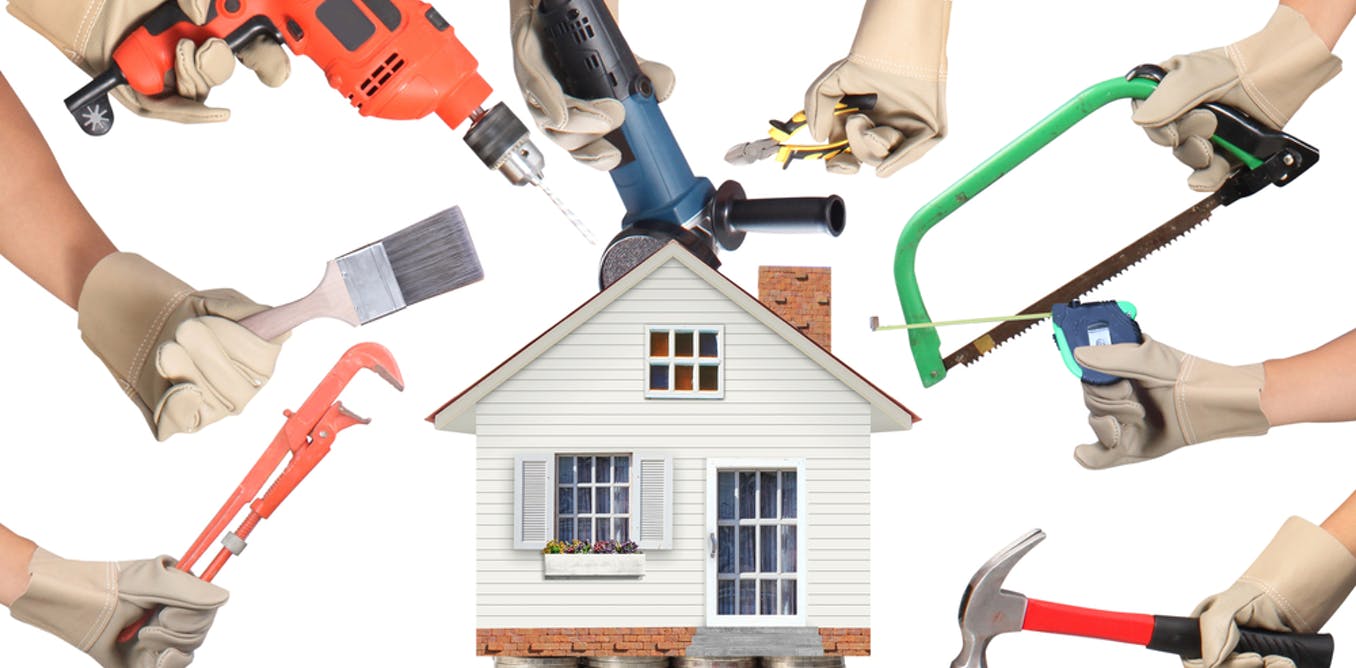

Home improvement: the easy way to avoid the cowboys and find a bona fide builder

Due to the uncertainty of Brexit, property prices and the cost of living are on the increase while household salaries have remained the same. Home extensions and improvements therefore remain an attractive, financially viable alternative to relocating and buying a new property.

Many homeowners are captivated by television DIY programmes, but are seldom aware of all of the potential pitfalls of engaging builders, the contract, and the quality standards required (for both materials and workmanship). Although most DIY programmes offer some important information, it’s easy to overlook these during the excitement – and stress – of getting the work done.

“Jerry building” is a commonly used term to describe cowboy or fly-by-night operators who provide ridiculously cheap estimates and cash in hand offers that are difficult to refuse. Homeowners are seduced by the cheap price without much thought for the potential risks when construction work begins. Trying to address time-consuming and costly mistakes can then become a major problem. The flipside of this is that others are put off hiring anyone to do their work altogether.

Brian Berry, chief executive of the Federation of Master Builders (FMB), recently stated that:

A third of home owners are so anxious about the possibility of choosing a bad builder, they don’t commission any building work whatsoever. This means that the UK economy could be missing out on £10 billion of activity every year.

The latest research undertaken by FMB reveals that, on average, homeowners “would spend £40,000 on major home improvement projects over the next five years if they could be guaranteed a positive experience”.

So how can you achieve this? The following tips will help you find a bona fide builder at a reasonable rate.

Getting a good deal

Check whether the builder is a member of a credible trade body, such as the Federation of Master Builders, the National Federation of Builders, and/or the Guild of Builders and Contractors. Members of these bodies are bound by a code of conduct.

Perhaps not the best choice.Shutterstock

Ask about the builder’s experience and qualifications – it’s not enough that they have professional-looking letterheads and business cards. Do not hesitate to check their recent jobs – and speak to past and current clients if necessary.

Don’t be shy. Professional builders won’t mind you conducting these checks. They realise how important it is for you to trust them and appreciate that their work is to a high standard. Only cowboy builders will be defensive and try to stop you looking too closely at their track record. Although there are several online websites – such as Rated People, My Builder, Trust a Trader and Find a Trade – that provide ratings for builders and local tradespeople, don’t rely on them too much. Due diligence is still required.

Many builders offer insurance-backed warranties for their work. This may involve a small additional cost but does provide extra protection for you, the customer. But check the cost and the level of cover provided before you accept. Ask the builder who the insurance is provided by, and whether they are an established insurer. All of this will put you in a better situation if something goes badly wrong.

Make a list of your requirements, and ensure the plans are in line with local planning permission guidelines and building regulations. If the job involves work to a wall you share with a neighbouring property, it may be subject to the Party Wall Act. Identify clearly what additional works are required – for example, rewiring, window replacements and decoration.

Ask for a detailed breakdown of the estimate (item by item) and check how long the estimate is valid for and how long the construction work will last. You can then draw up a contract using standard forms prepared by the trade bodies mentioned above.

This should include an agreed contract duration (a start and completion date) and the key phases during the work. Rather than paying hefty deposits or for everything in one go, agree to make staged payments as each of these phases is completed – if you’re not sure how this works, seek advice from the Royal Institution of Chartered Surveyors who will put you in touch with local surveyors. This is critical. Many builders tend to front load the payments rather than spreading the cost across the duration of the contract, which makes it far harder for you to seek redress if anything goes wrong.

Peace of mind

Peace of mind is worth a little extra cost. Before releasing any stage payments, check with an appointed building regulations inspector that all works comply with building regulations. And ensure everything is in writing and above board. If someone is prepared to cheat on their taxes, are you sure they won’t cheat on you?

An invoice and proper paperwork proves a relationship and, if a dispute follows, it can be helpful. Without it, how can you even prove your builder was doing the work? You can further strengthen your position by taking regular photographs of the works and keeping a log of their activities on a daily/weekly basis.

And hold back a final payment until the work is complete, warranties and guarantees have been issued to you, and the job has been certified as completed by your building regulations inspector. If you’ve followed these simple tips, you can then sit back, relax and enjoy your new home.

Source

http://theconversation.com/home-improvement-the-easy-way-to-avoid-the-cowboys-and-find-a-bona-fide-builder-90350

Stop Doing These 5 Energy-Sapping Home Improvement Chores

In this age of social media and reality television, many people think their worth is directly connected to what others think of them. They improve their homes inside and out, always anticipating passers-by are judging and keeping score.

Such a mentality wastes energy and other resources. By doing away with some home improvement duties and realizing they aren’t essential, people can help the planet.

1. Cleaning the Windows Weekly

Weekly window cleanings are among the chores people do too often. They can instead do window cleanings every quarter or season. In addition to the water used by each window-cleaning session, some advice-givers recommend only using purified water. The easiest way to get that is to boil the liquid, which also takes up resources.

One way to potentially reduce the amount of water used is to mix equal parts vinegar with it. That addition could help tackle caked-on materials.

People who do want to boil water shouldn’t use their microwaves. An experiment that timed how long it took to boil 500 milliliters of water found a microwave only had 34 percent efficiency compared to the 71 percent efficiency of an electric kettle.

A lot of the energy required for microwaving gets used converting electricity to microwaves. In contrast, electric kettles are usually well insulated and have heating coils that sit in the water. The design of modern electric kettles usually results in only a small amount of heat escaping into the air and wasting energy.

2. Washing the Car Frequently

People often decide that car cleaning fits in with their must-do home improvement tasks. They think no matter how beautiful their houses look from the outside, the outer appearance doesn’t matter if their vehicles have dust, dirt and road grime.

Most of them probably don’t think about the wastefulness associated with ongoing car-washing. Statistics from 2016 indicate that people use 48,000 gallons per car during a year. Car owners also account for millions of car washes that happen every day.

Individuals should try to reach the realization that their neighbors probably aren’t staring at their less-than-pristine cars and viewing them with scorn. Moreover, even the most thorough washing job could have short-lived results due to passing birds, the dusty pawprints of nearby cats and pollen buildup.

3. Ill-informed Mulching

Mulching is a gardening practice that can be great for the environment because it regulates the soil’s temperature and water levels, adds nutrients and fights erosion. However, people often go about mulching in the wrong ways and therefore waste energy or other resources.

For starters, a skid steer is a piece of equipment that makes mulching more efficient if it’s correct for the job. While a standard-flow skid steer runs at full capacity, a high-flow option operates at 50 percent of its capacity and is less prone to mechanical failure while offering productive output.

People should also avoid shredded cypress mulch. It’s a popular option, but state-specific data from the University of Florida indicates that the process that turns approximately 129,000 tons of Florida’s cypress trees into mulch each year requires nearly 3 million cubic feet more cypress than it replaces.

4. Watering the Lawn Constantly

A green, lush lawn looks nice, but it’s also taxing for resources. Specifically, turning a sprinkler on for only an hour could use as much water as a four-person household uses daily. Using mulch is an excellent way to cut water consumption since it aids in moisture retention.

In any case, lawns only need watering weekly. It’s also best for people to do the task in the morning. During that time of day, the comparatively lower temperatures reduce evaporation.

5. Saturating Surfaces With Cleaning Products

People feel satisfied when liberally using household cleaners all over their kitchens, bathrooms and almost anywhere else. However, many of those products contain volatile chemical products (VCPs), which are a subgroup of volatile organic compounds (VOCs). Scientists already know that VOCs contribute to smog.

Research specific to VCPs suggests they make up half of the fossil-fuel VOC emissions in industrialized cities. Ethanol, chlorinated hydrocarbons and acetones are some examples of VCPs.

A different study that tracked 6,200 people over a two-decade period found evidence that regular use of household cleaning products could be as damaging to the lungs as smoking 20 cigarettes per day.

Given that household chemicals could harm the environment and the people using them tend to expend excessive energy while scrubbing away at surfaces — and potentially causing lung damage — individuals must be careful about which products they use, how much they apply and the frequency of use.

Getting Realistic About Household Chores

It’s time for people to evaluate the home improvement duties they do and why. That essential scrutiny could make them realize many are unnecessary to do at all, or at least so often. Cutting the cleaning can have positive effects on the environment, as well as other things like improved utility usage and better health.

5 Home Improvement Options That Can Increase ROI — urdesignmag

Billions of dollars are spent by Americans on home improvement projects to make their homes look good. Some do it to impress others and some do it to be able to sell their home at a better rate when they finally decide to sell it off. The reason for spending this large of an amount on homes is because, at the end of the day, the homeowner is actually spending it as an investment. Home improvement projects increase the value of your home and get you a better price when you decide to sell it.

There are a plethora of options that can increase the ROI of your home such as a paint job, some kitchen renovations, clearing out the garage, spending on the landscape, gardening etc. Due to these many options, it can get difficult to pick one. To help you in this regard, given below are five ideas that can provide you with a great ROI.

accounts for 70% to 80% of the investment, depending on the property location and how the flooring is laid out. However, you will also need to keep the floor well maintained. Do timely repairs, replace pieces that squeak etc. They cost $5 to $10 per square foot.

Landscaping – Choosing the right landscaping options to install outside your home can get you about 100% return on investment. That’s huge. If you have the budget then it is recommended to go for a deck and patio because they have an ROI of about 102%. Hardscape materials such as stones, bricks, and woods outside your home can display a lavish look and increase the aesthetics of your home while adding value to your home. Last but not the least, adding a few lights along the pathway can do wonders for your entire property in terms of ROI.

Upgrade Insulation – According to Remodelling Magazine, the home improvement option that brought the highest ROI wasn’t the kitchen or the bathroom, but attic insulation. Upgrading insulation in the attic brought 108% ROI in 2017 to homeowners. It’s a great investment because insulation costs less than $1500 in total and the return is huge.

Replacing Main Door – The first thing that most guests tend to notice when they arrive at your home is the main door. If it is in dire need of repair then we’d say save the money on repairs and go for a new one. Why? Because a has an ROI of 91% while a fiberglass door has an ROI of 71%.

are helping people by providing them with blinds and other accessories to give their home a new look so make sure you shop around.

comments

Source

https://www.urdesignmag.com/architecture/2018/07/12/5-home-improvement-options-that-can-increase-roi/

Quick DIY home improvement projects

(BPT) – The words home improvement usually conjure up images of major undertakings like tiling your bathroom or kitchen or tearing down a wall, taking hours or even days to complete. The fact is there are some meaningful home improvements you can finish in under two hours.

1) Need more daylight? Have you ever wished your home had more daylight? Maybe you want to bring light to a small place like a closet or laundry room. Or maybe you have a room with a window but still not enough light. One solution is a daylighting system from Solatube. This product can be installed in under two hours and floods the interior with natural light.

2) Concerned about security? Installing a video doorbell takes just a few minutes and you can monitor visitors at your front door on your smartphone through an app. This is a way to add some security to your home. You can be anywhere with your phone but answer your front door and see who’s there. They have no idea where you are, home or otherwise.

3) Dealing with poor indoor air quality? The upstairs can often be hotter than the downstairs. Air can be humid and wet. House odors from cooking, pets, etc., can hang around. A Whole House Fan is quiet (with a light white noise) and can be installed without reframing. When you open the windows with the whole house fan on, it strips out the heat from the home as well as the unwelcome smells. In summer months it keeps the house cooler and it eliminates stale air in the winter.

4) Considering a new bathroom fan? Another product that installs quickly is an upgraded bathroom fan. It comes with a variety of options such as heaters and lights. An upgraded bathroom fan can dramatically reduce bathroom humidity and odors and run more quietly.

5) Still using outdated light bulbs? An easy home improvement project is to swap out light bulbs for LEDs. Even CFL bulbs can’t hold a candle to LED bulbs, which, while more expensive, last up to 20 years or more.

This gives you an idea of some ways to spruce up your home in under two hours. But the changes will be long-lasting!

For more easy home improvement ideas, visit .

Source

http://www.stlamerican.com/online_features/senior_living/quick-diy-home-improvement-projects/article_4ec72d4f-e716-52db-939e-791031bbe33a.html

Couple Finds Hilarious Note From Previous Homeowner During Bathroom Renovation. — InspireMore

Some people really know how to leave their mark.

Alex and Jess Monney are a married couple from the San Francisco, California Bay Area.  The Monneys recently went viral on Twitter after the couple decided to renovate a bathroom in their home. While this sort of project is ordinarily pretty mundane, this one became instantly noteworthy when they discovered a hilarious time capsule hidden behind a wall that made them literally laugh out loud.


Twitter

While the bathroom didn’t look too shabby in the pictures Jess shared, it had been a good twenty years since it had been updated. Even though Jess was eight months pregnant when they decided to rip the room apart, Jess says she loves reno projects, and they were excited to see the results of the renovation.


Twitter

One day, as Jess and Alex’s contractor pulled down the old fixtures, he discovered a handwritten note on the wall, accompanied by photos of the home’s former residents.

Meet the Shinseki family, who remodeled this same bathroom back in 1995. Moreover, Mrs. Shinseki is not too pleased that someone has decided to undo all of her hard work in order to renovate the room again.


Twitter

The note says:

“If you’re reading this, that means you’re remodeling the bathroom again. What’s wrong with the way we did it?!?!?”


Giphy

Alex and Jess cracked up when they saw the note. Alex said, “We thought it was hilarious! Totally unexpected so it gave us a good laugh throughout the day.”

Mrs. Shinseki even included a photo of the family pet, a bunny rabbit named Cassie. Aw!


Twitter

When Twitter saw Alex’s tweet, it instantly went viral with thousands of likes and retweets. Everyone wanted to start pulling apart their own walls to see if there were any secret messages hidden there, too!

Me going through our house looking for hidden messages right now pic.twitter.com/8fyv8NaDeS

— Benson (@bennyhanaaa) July 4, 2018

The Monney’s story also inspired others to share their own tales of finding time capsules and other goodies left behind by their home’s former owners.

My parents had their house custom built in the late 1970s. Dad routinely stopped by and gave the builders a six pack of beer at the end of the day on Fridays. He found this in the wall when renovating the master bathroom shower in 2013: pic.twitter.com/492jjZHxi5

— Mars Garrett (@marsgarr) July 3, 2018

Some people were happy to share what they themselves had left behind for some unsuspecting homeowner to find one day.

Phenomenal. I love that.

When I remodeled a room on a house years ago, I left a 6 pack of Guinness and a note in the wall. No idea if anybody has found it yet.

— Matt Singley (@mattsingley) July 3, 2018

Although the internet sleuths tried their hardest to locate the Shinseki family, so far the couple hasn’t come forward to accept the praise for being so funny. Alex said if he were able to send them a message he’d tell them:

“Your bathroom, and home, is lovely. It has given us a lot of beautiful memories and we can’t wait to raise our little baby girl here. Sorry we’re changing the bathroom, but the shower is too small for me to fit in (I’m 6′ and my wife is 5′). Thank you for the amazing surprise!”


Twitter

Thanks for the laughs, Shinseki family! We hope you (and your bunny) are in good health.

If Mrs. Shinseki’s message made you laugh, please share the smile with others!

Source

https://www.inspiremore.com/alex-and-jess-monney-home-renovation-note/