Category Archives: News

Kitchen Renovation Ideas For Your Home

Have you been putting off parties and invitations to friends and family because you can’t stand the sight of your kitchen? Well… rejoice. The following are some ideas for kitchen renovation. You can dress up your old, tired kitchen with faucets and other kitchenware–for an easy fix–or tear the whole thing down and start over. It all depends on your budget, your layout, how much time you have, etc.

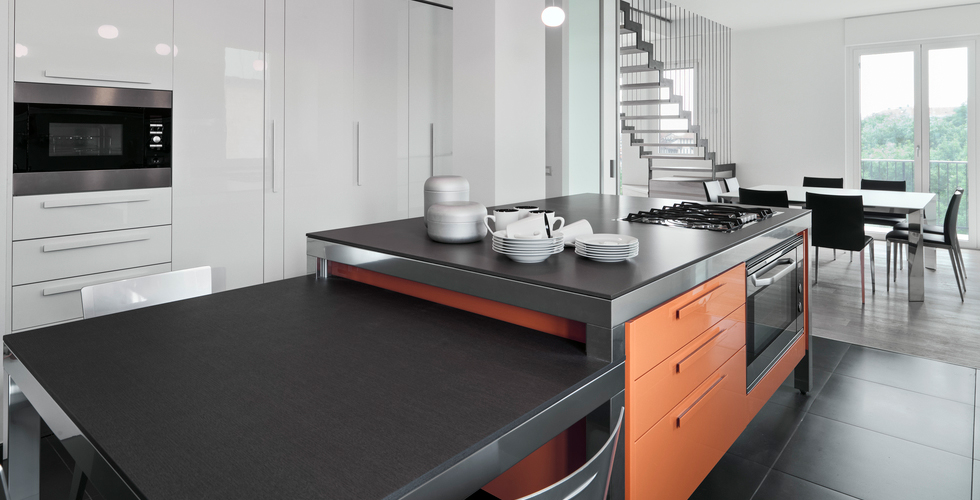
The Perfect Entertaining Kitchen

If you are a homeowner that has entertainment in mind, a must-have is a standalone island. A little island paradise can be created in a kitchen, provided it has the room. These islands let your guests join you as you prepare the next award-winning culinary creation. They can host a second sink and provide extra workspace. And for parties, they are frequently the focal or gathering point. If your guests do want to interact with you while you are preparing, consider concealing your sinks and other work areas with a multilevel island.

And if you have the space and the budget for it, think about opening up your kitchen to make more room for entertaining, food prep, storage, and every day basic use.

Surfaces That Are User-Friendly

Surfaces that are easy to clean are the best. No matter what your kitchen’s décor, the most popular choices for appliances are still stainless steel. The reason? They resist scratches and stains, yes. But they look good doing it, as well. You’ll have more time to spend with family and friends because cleaning your kitchen will be quick and easy. Germ and dirt busting surfaces like ceramic tile, stone countertops, and stainless steel make keeping your kitchen tidy an absolute breeze.

Give Your Appliances an Upgrade

While we’re on the subject of stainless steel, if your budget allows, it could be time to update those tired, old, energy draining appliances. This can include everything from refrigerators to dishwashers. With today’s technology, you can get some assistance on compiling your grocery list from a newfangled, high-tech refrigerator. And pre-rinsing is a thing of the past with the latest dishwashers.

Even if your budget is a little on the stretched side, consider appliances that are more energy-efficient. You will actually save money in the long run.

Let Your Faucet Take Center Stage

The sink/faucet is the focal point of many a kitchen. And whereas, it may be highly entertaining to play with the spray patterns on today’s contemporary faucets; new touchless faucets serve you well during pre-party activities. How? By freeing up your hands with a modern technology influenced touchless feature. Not only do they help prevent cross-contamination, but they also make every kitchen task a little bit easier. Hands-free technology already exists in other areas – why not in your kitchen?

Even if you haven’t put off inviting people over because of your kitchen, renovation is still something to consider. A new, high-tech kitchen will increase the value of your home immeasurably. It’s a win-win situation. You’ll love living and creating in your amazing kitchen. But, when you’re ready, you will get more money for your home when you sell (thanks to that fabulous kitchen renovation).

Source

http://www.discountbathroomvanities.com/blog/kitchen-ware/kitchen-renovation-ideas-for-your-home/

How to Build Sturdy Garage Shelves « Home Improvement Stack Exchange Blog

I’ve done some finish carpentry in the past, but I’m really more of a framer because I like to just throw things together quickly and make them as strong as possible. With garage shelves, in my opinion, they don’t need to look fancy, but they do need to be sturdy – I’ve seen far too many saggy garage shelves that look like they’re going to come tumbling down at any moment. In fact, I’ve actually had a pet killed by some pre-built garage shelves that collapsed.

I recently built some new garage shelves in the home we have been living in for a couple years now. I had always planned to build some, but only got around to it a few months ago. I wanted to share my experience to give other DIY-ers an idea of a simple shelving design that is built to last. The pictures in this post are only of one of the walls I built shelves on. The total cost for wood, nails and screws for both walls was just under $200.00. My goal was to build the strongest shelves as possible, without spending too much money. For the amount of sturdy shelf space we now have in our garage, $200.00 was well worth it.

Tools Needed:

  • Hammer and nails (preferably a nail gun if you have one)
  • Screws and a screw gun. I used 3 ½ inch wood screws.
  • Some kind of saw. a chop saw would be best for this, but technically you could use a skill saw, a jigsaw, a table saw, or even a hack saw if you had to.
  • Tape measure
  • Stud finder
  • Long level (at least 4 feet)
  • Pencil
  • Small ladder
  • Chisel (if you have baseboard in your garage)

Prep Work

Measuring

  • Know what you’re going to store on the shelves and their dimensions. Once you know the height of the tallest item you plan on storing on the shelves,
  • Measure the distance between the floor and the ceiling. Divide this distance by the height of the tallest item you will be keeping on your shelves. For example, if you have a cooler that is 20 inches tall, and the distance from your ceiling to your floor is 108 inches tall, you would divide 108 by 24 1/2 (I’ll explain why it needs to be 4 ½ inches taller than your tallest item later). This would equal roughly 4.4, which means that you have enough room for 4 rows of shelving with 21 inches of usable height.

Obviously you don’t have to make all the shelves be the same height, but make sure to have at least one of two rows of shelving tall enough for all of your tallest items. I made our bottom two shelves taller to hold the larger, heavier items (like food storage), and made the upper shelves a little bit shorter to hold the smaller, lighter items. I would also recommend storing all of your DIY chemicals like herbicides, pesticides, or cleaners on the top shelf, so your children cannot reach them (easily…).

Finding and Marking the Studs

  • You will need a stud finder for this part. What I did was mark all the vertical and horizontal lines that my shelves would follow. Take your stud finder across the wall horizontally (twice), once up higher, and once down lower and mark each stud. Then take a 4 ft (or longer) level and trace a straight vertical line between the upper and lower marks. Use that line to extend the vertical line all the way up the wall. This vertical line will be your guide to help you see where to screw the boards to the wall.
  • Next draw the horizontal lines by measuring from the ground up. If your bottom shelf will have a 21 inch space under it, measure up 24 ½ inches and use your level to draw a horizontal line all the way across the wall. The next horizontal line should be 24 ½ inches above that line (assuming all of your shelves will be the same height). The reason you have to go up 24 1/2 inches to build a 21 inch space is because you have to account for the 1/2 inch plywood on top, and the 3 inch tall  frame board.

Calculating Amount of Wood Needed

  • The wall I built these shelves on was about 14 feet long, so I needed two 8 foot sheets of plywood for each row. I had to cut off the extra two feet with my chop saw.
  • Once you know the length of the wall, it’s fairly straightforward as far as counting up how many 2x3s and sheets of plywood you need. For a 14 foot wall, I used 5 2×4 vertical posts, two on the end and three in the middle, each spaced about 3 ½ feet apart. You can do whatever you want here, but make sure you don’t go too far between the posts so you have enough strength.

Building the Shelves

Once you have all of your lumber, it’s time to start building. This is the fun part and if you’ve already measured and marked everything, the building portion should go fairly quickly (with this design).

  • The first step is to tack the 2x3s to the wall. Place them over the horizontal lines you drew and put a nail in at each vertical line (where the studs are). I used both screws and nails for this part. Screws offer the horizontal strength, and nails provide the vertical strength.

As you can see in the picture below, I also used the perpendicular wall for increased support. I would recommend this as it provides horizontal strength.

  • After screwing and nailing the boards up on to the wall, you can put up the end boards (2x4s). Measure and cut these boards (and all the other vertical support 2x4s) to be ½ inch taller than the highest board against the wall. This is so that when you lay the plywood down on the top shelf it will fit into the frame for additional support.
  • The next step is to put up the outer 2×3 boards on each row. Start at the bottom and place something under one end, while you nail the other end to the perpendicular board that is against the wall. Replace whatever you were using to support the other end with the first vertical support 2×4. Nail it into place with only one nail so you can still pivot the board side to side and level it. See image below.
  • Continue moving across, putting the next horizontal 2×3 into place and nailing the next vertical 2×4 to it.
  • Repeat this process with the next row up, but before you nail the vertical 2×4 to the second row, make sure to level it vertically with your long level. After you have leveled the 2×4 and nailed it to the second row, the remaining rows will go quickly. I would still check each row with the level as some boards can be warped and will need to be bent into place.

It’s a little difficult to see in these pictures, but I have also tacked in some support boards between the horizontal beams, coming out perpendicular to the main wall.

The final step is to lay in the plywood pieces. They should fit right into your frame and once nailed down will offer additional strength coming out of the wall, as well as side to side. I nailed them down roughly every 12 inches.

As you can see in the picture below, your garage shelves should be strong enough to double as a jungle gym for your kids!

Filed under ProjectsTips and Tricks

Tagged: , , ,

Source

https://diy.blogoverflow.com/2013/03/how-to-build-sturdy-garage-shelves/

Tiling a Fireplace Surround « Home Improvement Stack Exchange Blog

THE SETTING

Our 1869 foursquare farmhouse had been renovated around 1905 to make it more “upscale and modern”. The front and back parlors were joined and a fireplace was installed.  In 1999, the house again got a makeover, with new beams, plumbing, wiring, but maintaining much of the molding, windows, and style from the turn of the 20th century.

The fireplace now consisted of a painted wooden mantle and trim, with a brick façade around the firebox.  The façade had been painted several times, but seemed fairly sound.  It was now a dull, dark greyish green. Time for a freshening up.

DESIGN

We decided on tile, selecting an arts-and-crafts style that would have been in keeping with early 1900s décor.  The 4 ¼” x 4 ¼” tiles were handmade in California.  We chose field tiles (regular four sided tiles), bullnose tiles (with one sloped finished edge) and a few decorative bulls-eye tiles for accents.  The tiles were about 1/2” thick and slightly irregular, with no built-in spacers.

The layout worked out fortuitously. We wanted wide grout lines, often seen on arts-and-crafts projects.  We also wanted decorative tiles on the inside corners where the vertical and horizontal runs met.

With the moldings closest to the façade removed, and with a careful adjustment of the grout spacing, we were able to get a pattern that gave us two columns wide on the sides and two rows deep on the horizontal section.  We wanted only full tiles between the decorative corners, but the 48″ spacing between the inside edges of the firebox was a bit too wide for 10 tiles, even with 3/8″ grout.  Stretching them out was not an option because the grout lines would be too wide compared to the vertical runs. So we decided to add tiles to the vertical inside edge of the firebox. This narrowed the horizontal opening by about 1½” ( the thickness of two tiles and thinset), down to an overall width of 46 1/2″ .  With just a little fudging of the grout width to a hair more than 3/8” (but not quite ½”), we got a satisfactory fit of ten tiles horizontally between the bulls-eyes.

PREPARATION

Getting ready for the installation, we took a closer look at the brickwork, only to find that it was not.  The sloping angle of some of the “brick” corners should have been a giveaway.  This was actually stucco that had been textured and grooved to look like decorative brick.

As I begin each DIY project around our house, my wife asks “Have you ever done this before?” the unstated, but obvious worry being that I was going to serious wound myself, set the place on fire or cause a giant sinkhole to swallow up our homestead.  My usual answer is a smug, silent look, implying that, beyond question, I am up to the task.  But his time, I actually hadn’t done ceramic tiling before.  Time to start reading, surfing the web, and asking my good old friends on diy.stackexchange.com.

While the paint on the “brick” façade was largely intact, we were a bit unsure about whether the thinset mortar used to mount the tiles would adhere well enough.  A quick post on DIY brought me some great feedback.  Regular contributor HerrBag suggested trying a test patch of thinset on the surface to see how well it adhered.  The test showed fair (not great) adhesion with some paint peeling away and some thinset sticking pretty solidly.

Heavy tiles and some exposure to heat suggested a stronger grip was needed, so we went through a vigorous scraping of the painted surface with a wire brush to remove any loose paint.  Then we did a thorough scarifying of the surface using an angle grinder with an abrasive wheel to cut grooves into the stucco.

You know how they say “preparation is more than half the task”?  Well we didn’t prepare well enough for the hurricane of dust that blew through our entire house.  We had taped and masked the wood of the fireplace and put down newspapers for several feet.  We wore safety goggles, dust mask and gloves.  Nowhere near enough protection!  The grinder threw up clouds of paint and stucco dust, worst in the immediate vicinity, but the film reached upstairs bedrooms!  We have since been cleaning for weeks.  And with old paint there is always the risk of lead contamination.  (Next time, a full plastic tent around a grinding project.)

TILE MOUNTING (Part 1)

Before beginning the actual tile mounting, we put on a skim coat of thinset to level out the variances in the stucco and give a more complete base for the tile.

Now on to the actual installation!  Guided by several books on tiling and an internet sweep, we positioned a support brace at the top edge of the firebox (the bottom edge of the horizontal run).  It was leveled and attached with light duty anchors and screws (it’s only temporary).

After mixing the thinset powder (having been warned away from premixed products) with a drill and mixing paddle, waiting the required slaking time (to fully absorb the water), and remixing, we slathered on the mixture, and then striated it using a notched trowel.  Finally, we began setting the tile, beginning with one of the corner decorative tiles, working across to the opposite decorative tile, using spacers to guide the placement and then tweaking to get even spacing.  Over the firebox, bullnose tiles are used, with the tapered edge facing down.

The row above then followed, finally filling in the area outside of the decorative tile, both using field tiles.  Numerous spacers were used to keep the tiles in position (including additional spacers gently wedged in where additional support or a slightly wider gap was needed).  Tiles are tapped into place with a rubber mallet to seat them firmly.  If precise leveling were needed, a tapping block, several tiles wide would be used under the mallet, but the slight irregularity of the hand-made tiles didn’t call for it.  We wiped off stray thinset from the faces of the tiles (lots on the first few, less as we got better at it).  Step back. Admire. Now go to bed.

TILE MOUNTING (Part 2)

Time to remove the brace and begin the vertical legs.  Same routine with thinset and then to the tiles.  Line up the first row just below the bottom of the upper section, and work your way down.  What? Wait! What’s going on?!?  The tiles are sliding downward!!! Oh, yeah.  Now I remember, the books, the videos said “Start from the bottom, work up”.  Now we see why.  Gravity!

Pull the tiles, scrape off the thinset.  Begin again at the bottom of the leg, with a flat spacer under the edge of the bottom tile, building with tile, spacer, tile, until they meet the upper section.  Adjust the gaps, using spacers as wedges until the gaps are comfortably uniform.  As discussed earlier, the layout resulted in a lucky positioning that didn’t require any tile cutting, a pretty unusual occurrence.  If a partial tile had been needed, it would have been determined in advance, cut with a wetsaw and placed at the bottom.

The tiles on the inside of the vertical legs are bullnose.  They are placed so that the inner edge will line up with the face of the return tiles that will be placed inside the firebox in a later session.  Now do the other leg.  (Is it getting easier or are we getting better?)  Again, time to knock off to let the mortar dry.  But clean up before retiring (uncured thinset comes off oh-so-much easier).

The last tiles to be set are the return tiles inside the front vertical edges of the firebox.  Same routine as the legs, beginning with a spacer, tile, spacer, building from the bottom to the top.  Again, luck (and a little tweaking on grout width) gave us full tiles with no cutting.  Clean up, let dry overnight and pull all spacers.  The tiling is done!  (Not the project, just the tiles).

GROUTING

Next day, grouting begins. Huzzah!  We knew exactly which grout color we wanted – Tobacco!  So warm, so rich.  But let’s mix up an actual sample.  A few tiles on a board, grout around the edge.  Uh, oh.  The tiles are wrapped in fudge!?  OK, the next color lighter, Earth!! Hmm. Still pretty muddy looking.  Five days and four more colors on a sample board led us to the right complement color.  Seeing the grout colors in reality, alongside actual tiles, is much more informative than a color chart.  Given the cost of a tiling project, “wasting” a few tens of dollars on several bags of different colors of grout is a small investment to be sure you get a shade that you like.  And once the grout is installed, it is cast in concrete.

One more step before the actual smear.  The top edge of the upper horizontal row will get a grout line that will show below the upper molding.  To keep that line on the same level as the rest of the grout, we installed a strip of furring level with the surface of the tiles.

Grout mixing and installation is like the books and videos say, but pay attention to the amount prepared at one time. Amateurs (like us) really should limit themselves to a small bucketful.

Mix, let slake, remix and apply.  The pundits vary in their advice about consistency from thinner than mayonnaise (or even soupy) to thick peanut butter.  Because of the wide joints, we leaned toward the stiffer end.  Using a grout float, work it into the channels, scrape off, holding the float at nearly a 90 degree angle and on the diagonal.  It really is a question of practice makes easier, if not perfect.  The nice part is you can go back over the area a few times if the first pass is a bit ragged.

GROUT CLEANUP

Follow the grout’s instructions about waiting before wiping down with a sponge, and then do so gently. Aggressive will just undo the careful joints you have so lovingly created.  You may need to finesse the ends of the joints, especially as they round toward the firebox returns and the decorative corners.

After wiping, wait the designated hours (as instructed on the grout bag, RTMS) to allow a good set before polishing the haze off with a soft cloth.  You can gently tune up the edges of the tiles if the grout is still a bit high, but moisten the rag to avoid digging out too much.

You may need to do the grout process in several stages. It took us three sessions – one for the horizontal field and one for each of the vertical legs and their firebox returns.

With moldings reinstalled, the project is now just waiting for caulk, color-matched to the grout at the base, grout sealing, and the first blazing fire.

Filed under ProjectsUncategorized

Tagged: , , ,
Source

https://diy.blogoverflow.com/2014/02/tiling-a-fireplace-surround/

First Time DIY: How to Attach Wooden Shutters To Brick « Home Improvement Stack Exchange Blog

Hey all! Here’s a fun project you can do over a weekend or two! I say “or two” in case you’re like me and this is the first time you’ve ever done something like this. HAHA!

My wife hated the shutters we had on our house… and rightly so…

So, we decided to build some board & batten shutters. FUN! Now, if I only knew what board & batten shutters were…

Board & Batten Shutters – “Board & batten” usually refers to vertical siding where wood strips (or battens) hide the seams where other boards are joined. Here’s a site that has a lot of examples of the different styles of board & batten shutters.

After figuring out what they were exactly, I looked up a design and built them. I’m not going to go into detail on how to build them, because frankly, I screwed up too much to properly teach you. But, if you’re interested, here’s a tutorial from Lowes that matched with the style that I built.

Again, I had never done anything like this so, like a good lad, I went to where the experts were: DIY.StackExchange.com! This post is actually based on my question to them. Now, onto the process:

  1. Measure, level and mark boards, appropriately aligning the future holes with the mortar between bricks.
  2. Drill pilot holes into the wood shutters, including a 1/4″ countersink to cover the screw heads up with wood filler.
    • What I learned: Unlike screwing wood to wood, where you can sink the screws into the wood easily without a countersink, when attaching wood to mortar, if you do not provide the countersink hole already and attempt to perform said action, you will strip the mortar and the screw will just spin and stay loose. Not good.
  3. Next, re-level shutters and mark the mortar with the masonry drill bit through the pilot holes. I found that only drilling the top two holes worked best for me. I’ll get to why in a minute. An extra set of hands comes in handy here.
  4. Set the shutter down and drill the top two mortar holes completely.
    • What I learned: Be sure to drill into the mortar enough to where the screw tip won’t hit a dead-end (Most recommended a 1/16″ or 1/4″ of extra room beyond the screw tip). If you don’t give a little extra space at the tip, you’ll encounter a great deal of resistance, the screw will not go in all the way and you’ll have to get the masonry bit out again.
  5. Attach the shutter to the house using the top two holes.
  6. Now, we’ll finish the bottom two holes: with your masonry bit, drill into the mortar through the board.
    • What I learned: I found this process to be the easiest for me, as my pilot holes didn’t always match up completely when I attempted marking then drilling all four at the same time. Less margin of error on my part. But, this is became a personal preference. Decide for yourself.
  7. Finish attaching the shutter to the mortar at the bottom with your screws.
  8. Use wood filler to patch the holes, lightly sand filler.
  9. Paint/stain/seal accordingly.
    • What I learned: I had already applied a sealer to the back of the shutters before attaching them. I taped off my house using wide painter’s tape after they were up and it saved me a huge headache of cleaning sealer off my house with mineral spirits.

Overall, I also learned:

  • I marked & drilled all of the pilot holes into the shutters at one time which saved me on having to switch between the masonry & wood drill bits. HINT: If you forget to take out the masonry bit and attempt to drill into wood, you very likely could start a friction fire! Haha!
  • Having two drills is a life-saver: I had my hammer drill set up with my masonry bit and my cordless drill had my Phillips bit in it ready for the screws.
  • Having a second pair of hands throughout the entire process was also a great deal of help. Thanks, Seymour!

Thanks for your help folks! I hope this walk-through helps someone else, too!

Filed under ProjectsTips and Tricks

Tagged: , , ,

Source

https://diy.blogoverflow.com/2012/07/first-time-diy-how-to-attach-wooden-shutters-to-brick/

The Master Bathroom Renovation {Part 2–Reveal!}

Today I have the full master bathroom reveal for you! If you saw the first post {catch up here} you read that I wanted to make sure that my parents saw this space first in person and not here on my blog ? They have returned from their snowbird travels and are settled back into their space so I can show it off. A new bathroom makes coming back to the cold much more appealing, doesn’t it?

For a quick reminder of how far the bathroom came (it was pretty much taken down to the studs), below is what they started with. It was your standard, 90’s builder bathroom. It had an oversized corner tub (that was pretty much worthless), tiles that were beginning to crack in the shower and plain 4×4 white tile on the floor. The bathroom was functional, but that was about it.

Here is where they are now, just about a month later. A new custom vanity, new mirrors, lighting, a whole new shower, and new tile just about everywhere. If you are curious about anything, I have linked all the sources at the bottom of the post.

I picked up some new bath accessories at HomeGoods to make the space feel a little more complete, and the gray velvet tufted chair came from there as well, isn’t it gorgeous? Now my mom has a place to sit down to put on her makeup and do her hair. I love the contrast of the dark gray in the otherwise lighter room and the silver nailhead trim ties in with all the brushed nickel finishes.

One thing my mom really wanted was a chandelier, though the 8′ ceiling height made that a bit of a challenge. My mom selected this chandelier due to the low drop, and it works perfectly, and it adds SO much sparkle!

I showed you the shower tile mock-up in the first post, and now you can see how it all looks completed. They found, much to my dad’s disappointment, that the pipes in their home were too narrow to allow enough water pressure to do more nozzles or wall jets in the shower. They compromised on this tower rather than getting new pipes installed, though I haven’t heard any complaints so far.

The custom frameless shower door really makes the space. Just a tip: they were told to put rain-ex on it to reduce the water marks and soap scum, which sounds like a useful trick to know! Since they plan to never move, the built-in bench in the shower makes sense. If you know my Dad {remember when he built my fabulous shelves?}, then you know he still plays senior league baseball regularly. Activities like that occasionally require things like new knees (etc. ?) so being able to sit down in the shower in case of future injuries (or surgery) makes quite a bit of sense.

I showed you this corner where they removed the tub, this area isn’t complete but you can see where the armoire is now moved in.  They have since taken the armoire doors off and filled it with towels and other bath accessories. They plan to put some plants etc. in this corner and add new custom roman shades on the windows.

My mom says it feels like she is playing dress up enjoying this room. I think the entire bathroom they had when I was growing up would probably fit in the shower in this space, so it’s nice that they have such a wonderful new space to enjoy at this point in their lives. If you have any renovation questions for them, feel free to leave them in the comments.

Chair, glass accessories–HomeGoods

Tile–Arabescato Honed Marble

XO,
 

Our posts contain affiliate links.  If you make a purchase after clicking on these links, we will earn a small commission, which helps to keep our content free.  You don’t pay a cent more than you would otherwise, since that would be tacky! Please see our full disclosure policy here.

YOU MIGHT ALSO LIKE THESE POSTS… :

Our posts contain affiliate links.  If you make a purchase after clicking on these links, we will earn a small commission, which helps to keep our content free.  You don’t pay a cent more than you would otherwise, since that would be tacky! Read our full disclosure policy here.

Source

https://www.11magnolialane.com/2018/03/10/the-master-bathroom-renovation-part-2-reveal/

13 Home Improvement Projects You Didn’t Know Are Illegal to DIY

With a decent set of tools, a little bit of know-how and a healthy dose of courage, DIYers can save money and earn bragging rights by handling tough home renovation jobs themselves. Some house renovation work, however, is best left to the pros — and in many cases, the law demands it. A patchwork of state and local regulations — and in some cases federal statutes — require homeowners to hire professionals, or at least get permission, to perform remodeling work that could potentially end with homeowners blowing up, burning, crushing, zapping or poisoning themselves, their neighbors or their houses.

1. Converting Ovens and Cooktops From Electric to Gas

You can definitely clean your oven with some DIY cleaners, but only licensed contractors are permitted to install natural gas equipment, according to Consolidated Edison. Those contractors are first required to obtain a series of work permits and clearances. The job requires work with both complicated gas and electrical systems and might involve converting electrical components from 240 volts to 120 volts, capping gas lines, converting two-pole circuit breakers to single-pole breakers and both tapping into existing gas lines and running new ones. This is over the heads of most do-it-yourself amateurs, even if licensed professionals weren’t required by law to do the job, which they are.

Mehmet Hilmi Barcin / iStock.com

Cost to Have It Done Legally: $100 to $2,000

Hooking up a gas stove is a fairly cheap and easy upgrade that won’t blow your budget if supply lines are already installed, according to Home Advisor. But as Angie’s List points out, a $110 to $135 price tag can quickly snowball if you have to tap into a gas line or install a new one, particularly if the new line has to travel a long way to the source. The worst-case scenario is that the house has no existing gas service at all. When new service has to be added, a few hundred dollars can turn into a $2,000 project.

2. Replacing Hot Water Heaters

Replacing, removing, installing and moving hot water heaters is home repair work that requires licensed professionals to obtain permits. When permits are involved, this is one extra renovation expense you don’t want to cut corners on. In Las Vegas, for example, the Uniform Plumbing Code dictates exact installation procedures for heater connectors and control valves. Another aspect of this complex, difficult and potentially dangerous work deals with achieving proper ventilation, temperature control and pressure control. DIYers risk not only reduced efficiency through mishaps like incorrectly installed insulation, but there’s a risk of fire, explosion, leaks and exposure to gas fumes.

Cost to Have It Done Legally: $1,028

The national average for water heater installation is $1,028, according to Home Advisor. This number falls inside an outrageously large cost range that runs from $311 to $12,000 — so it’s important to pay attention to these renovation costs before buying because they might be reasons to not buy a house. Variables such as the size of your tank, its location, age and type — tank or tankless — all factor into the equation. Like most home improvement projects, rules and regulations can vary considerably by locale. In California, for example, codes require earthquake straps to be installed on hot water heaters.

3. Demolishing a Wall

Some walls exist only for cosmetic purposes. Others partition open spaces into rooms or conceal necessary systems. Load-bearing walls, on the other hand, are critical to the structural integrity of your home, and if you want your renovations to pay off, you need to be careful before making them. If you want to remodel, such as moving to an open floor plan, remember that it’s not always clear which walls serve as critical supporting structures and which ones don’t. Also, it’s hard to tell what’s behind a wall, and even if you can definitively say that the wall you want to remove isn’t load bearing, it’s likely that demolition requires a permit either way.

Cost to Have It Done Legally: $3,026

The national average cost for interior demolition is $3,026, with the typical range between $1,319 and $4,955, according to HomeAdvisor. Expect your costs to be near the higher end of the spectrum if matters are complicated by the presence of electrical or plumbing systems feeding multiple appliances. Also, demolition creates debris. The cost of carting off that debris, which can be significant, will be built into your contractor’s bill.

4. Asbestos Removal

Asbestos has been definitively linked to lung disease and some cancers. Modern builders don’t use it, but the strong, fire-retardant material was a common component in building materials for generations. If you have an older home, it’s possible to find asbestos on siding or roof shingles, hot water pipes or steam pipes, or in wall and attic insulation. This is not among the DIY projects you want to — or are allowed to — attempt on your own. Not only shouldn’t you try to remove asbestos by yourself, according to the Environmental Protection Agency, you shouldn’t even disturb materials you suspect of being asbestos for testing purposes.

Cost to Have It Done Legally: $1,791

Asbestos is most dangerous when it becomes disturbed, and the process of removing it can send dangerous fibers airborne. Removal, therefore, requires special equipment, and disposing of it is more specialized and costly than normal construction debris, thanks to strict EPA removal guidelines. All of that is factored into the price of removing the toxic material, which isn’t something you can DIY.

5. Lead Removal

Like asbestos, lead was, but no longer is commonly used, in building materials. The EPA issues strict regulations — and Congress has passed a wave of legislation — dealing with how lead must be removed, handled and discarded. Lead can be found in water, soil and even in the air, but homeowners are most likely to encounter it in paint applied years ago in older houses. This is not a do-it-yourself project.

Cost to Have It Done Legally: $2,670

The national average cost of lead abatement services is $2,670, but the range is broad: $800 to $7,600. But dealing with it is just one of the ugly realities and expenses that come with buying a house. Your price will depend on the type and age of the paint, the amount of paint that has to be removed, and the level of work involved with ensuring dust or small particles don’t get into the HVAC system.

6. Cutting Down Large Trees

Most localities require homeowners to get permits to cut down trees — and for good reason. If you don’t know what you’re doing, it’s likely that branches, limbs or even an entire tree can come crashing down on your house, your neighbor’s house or anything else in the area. If utility poles are near, so is the risk of electrocution. Finally, when it comes to cutting down trees, the tools themselves are dangerous.

Cost to Have It Done Legally: $651

The national average for tree removal is $651, although you could pay as little as $75 and as much as $1,500, according to HomeAdvisor. Factors that affect cost are the height of the tree, the tree’s condition and whether it’s leaning or standing straight. Weak, diseased, decaying or dead trees can be harder, and therefore more costly, to remove.

7. Removing a Water or Fuel-Storage Tank

Maybe you recently switched from oil to gas and you want to save money by removing the old tank yourself. In other cases, a leak in an old fuel tank from a previous system might require action that you don’t want to pay for. Sorry, but this isn’t something you can remodel on your own. The environmental hazards associated with the removal and disposal of fuel containers has forced local, state and federal regulators to preclude weekend DIYers from removing them.

Cost to Have It Done Legally: $848

You can expect to pay between $450 and $1,248 to have a professional dismantle and haul away an old oil tank, with the national average price coming in at $848, according to HomeAdvisor. Factors that affect price include whether the tank is buried below ground or situated above ground, whether the tank is leaking, the size of the tank and what kind of fuel the tank was used to store.

8. Roof Repair

Your roof is one of the most critical and expensive systems in your entire home — and it’s almost never a place for DIYers to try to save a buck. The obvious danger of falling is coupled with the fact that roof work is complicated. Also, it’s likely that you won’t even be able to identify the source of the original problem, much less fix it correctly. Laws require a permit for any work that changes your home’s roofline, but even though other repair jobs don’t require a permit, attempting roof work yourself without hiring a professional is likely to void your roof’s warranty. Build up your emergency fund for any potential roof work — you’ll be glad you did.

Cost to Have It Done Legally: $770

The typical roof repair costs between $336 and $1,226; the national average is $770, according to HomeAdvisor. Homeowners should understand, however, that there is a huge variety of issues that cause roof damage — and an equally vast menu of costs associated with fixing those problems. Removing ice dams in the winter, replacing missing shingles after a storm or finding and patching a leak from an unknown source all could come with vastly different price tags.

9. Installing a Skylight

Roof penetrations, such as the kind needed to install skylights, usually require a permit to create — and it’s a job that’s easy to mess up, even for the handiest DIYer. Not only does installation require gouging a precision hole in the roof and then re-sealing it with expert waterproofing, but the job might involve cutting into a truss, maneuvering around wiring and HVAC equipment in the attic, and building a framed tunnel called a chase.

Cost to Have It Done Legally: $1,508

In the U.S., the average cost to have a skylight installed is $1,508. The price range swings wildly between $485 and $3,786 — and that fluctuation has to do with the large number of options. Fixed skylights are cheapest — they don’t open. Ventilating skylights open like windows, and the newest options, tubular skylights, can nearly eliminate the need for electric lights during the day. The size and shape of the skylight, among other features, also affect the price.

10. Removing Nuisance Animals

There’s no law against waging a war against pests — up to a certain point. While bug spray and mouse traps are sold at hardware stores, critters that cross the line from pests to “nuisance animals” are dealt with differently. In many jurisdictions, such as New York and Pennsylvania, homeowners cannot do battle with animals such as squirrels, raccoons, skunks and opossums. In some cases, trapping, shooting or poisoning might be forbidden. Other times, the animal might be endangered or otherwise protected. In other cases, there could be a risk of spreading diseases like rabies. Other times, relocating a nuisance animal could disrupt a surrounding habitat.

Cost to Have It Done Legally: $316

Winning the war on wildlife costs an average of $316 across the country, according to HomeAdvisor. That range can fluctuate between $85 and $900, depending on a range of factors, not the least of which is the type of animal and the level of infestation, but the removal method impacts the price as well.

Valerie Loiseleux / iStock.com

11. Pumping a Septic System

Septic systems are regulated all the way up to the federal level because of their potential to impact water resources, the environment and the public health. Regular pumping is crucial to keep septic systems functioning, but this is not a job for the homeowner. Not only does it require special tools and skills, but there are strict regulations on how the system’s contents are to be handled, transported and disposed of.

Cost to Have It Done Legally: $380

The national average cost of pumping a septic system is about $380, according to Home Advisor, which recommends that most homeowners receive the service every one to three years. The service technician also might notice problems that need attention, such as worn filters or submersible pumps that need replacing.

12. Build a Staircase

If you’re going to remodel your home, you need to know the rules. The International Building Code provides standards for the construction of stairs. Many local building codes, such as those in San Francisco, closely mirror those standards and require legal approval and permits for homeowners who want to build their own staircase. In many cases, staircase regulations are lumped in with regulations about building decks that stand a certain height off the ground.

Cost to Have It Done Legally: $1,963

Homeowners can hire a professional to build main staircases, attic staircases or basement staircases inside, or deck, patio or porch staircases outside. The average homeowner can expect to pay $1,963, although it could cost as little as $375 or as much as $5,000, according to HomeAdvisor. The disparity can be traced to the style and type of stairs, the materials used and whether an old staircase has to be demolished and removed.

13. Install a Furnace

Fire, explosion and exposure to poisonous gas are all reasons never to attempt to install your own furnace. Both the removal of old furnaces and the installation of new ones are complex jobs that are tightly regulated and require both permits before and inspections after.

Cost to Have It Done Legally: $4,204

The average cost of having a new furnace installed is $4,204, which is the mean number in a price range that swings dramatically between $149 and $9,000, according to HomeAdvisor. Your choice of electric, oil or gas plays a big role in how much you’ll pay, but even within those broad categories, there can be thousands of dollars in the difference between high- and low-end furnace models.

Source

https://www.gobankingrates.com/saving-money/home-improvement-projects-illegal-to-diy/